
Moshi & Arusha
Moshi is a principal base for climbs. Arusha is another common starting point for travellers combining the mountain with a safari or other northern Tanzania experiences.
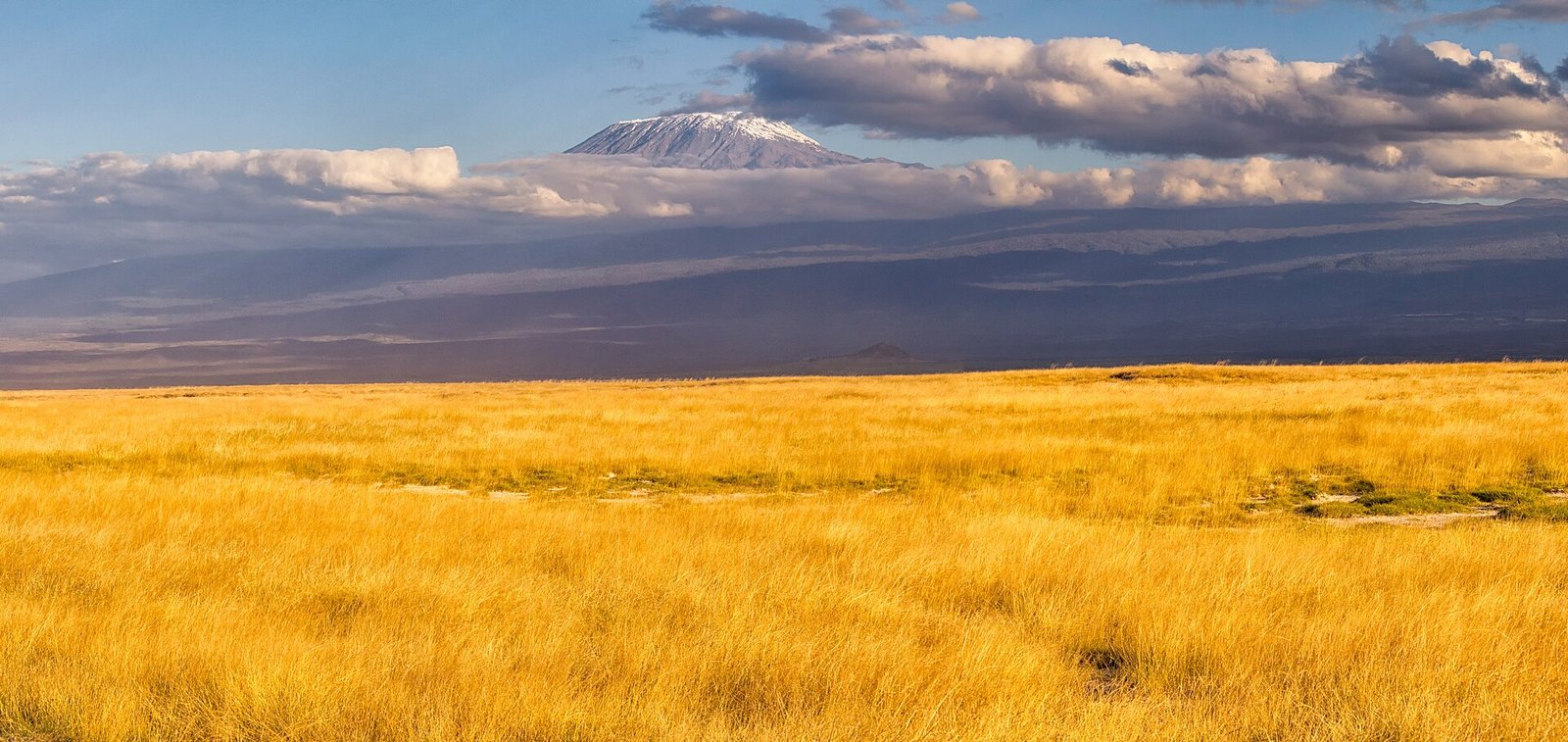
Highest mountain in Africa
The Complete Tanzania Climbing Guide
One of Africa’s most iconic landmarks and the world’s tallest free-standing mountain: snow-capped, volcanic, and a journey from tropical forest to an almost polar summit.
Northern Tanzania, near Moshi and Marangu, close to the Kenyan border.
INTRODUCTION
Reaching Uhuru Peak is a major achievement. Standard Kilimanjaro routes are trekking routes that do not need advanced climbing skills, but the climb is physically demanding and high altitude creates serious risks even for fit, experienced hikers.
Choosing the right route, allowing enough time to acclimatise and climbing with a licensed operator are essential parts of planning.
Duration, route availability, park fees and operating arrangements can change. Confirm your itinerary with a licensed operator before booking.
LOCATION
In northern Tanzania, close to the Kenyan border. It rises above the surrounding plains and is visible from various places in the region when weather permits.
Moshi is a principal base for climbs. Arusha is another common starting point for travellers combining the mountain with a safari or other northern Tanzania experiences.
Protects the mountain’s principal environments and climbing areas, from montane forest to high-altitude moorland, alpine desert and the cold summit zone.
Arusha to Moshi generally takes about 1.5 to 2.5 hours. Kilimanjaro International Airport to Moshi is usually shorter, often around an hour. Your operator should confirm the hotel, park gate and transfers.
Can you see it without climbing? Yes. Depending on weather and visibility, there are views from surrounding towns, countryside and selected viewpoints. Guided day hikes and authorised forest experiences let you explore parts of the mountain without a summit expedition, and a short visit around Moshi can suit limited time.
WHY IT’S FAMOUS
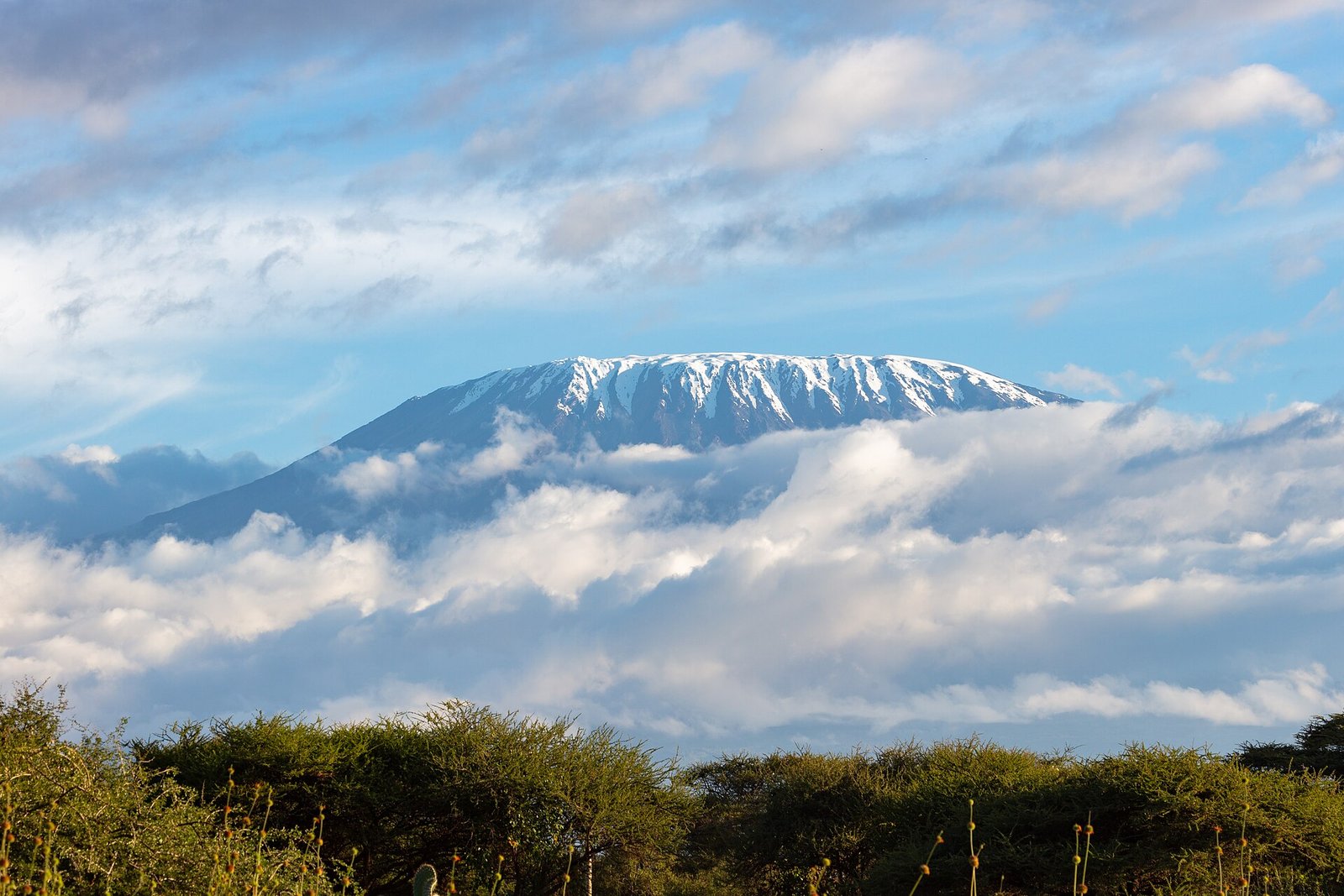
Uhuru Peak offers a sense of achievement and panoramic views when conditions allow. Altitude is also the main challenge, as available oxygen falls with elevation and trekkers must give their bodies time to adjust.
It rises prominently above the landscape rather than forming part of a range, and can be admired from far away on clear mornings.
Cultivated foothills, montane forest, heath and moorland, alpine desert, and the arctic summit zone. Exact vegetation depends on route, elevation and weather.
Kibo is the highest cone and holds Uhuru Peak. Mawenzi (about 5,149 m) is rugged and technical. Shira is an older volcano whose collapse formed the Shira Plateau, crossed by western routes.
Many summit attempts start late at night to reach the top near sunrise. It can be memorable, but summit night is cold and demanding, and must never be put before health and safety.
HOW HARD IS IT?
Standard trekking routes do not usually need ropes or advanced technical skills. Nevertheless, it is not an easy hike.
Reduced oxygen availability is the main challenge.
Consecutive days of walking, with steep or uneven terrain in some sections.
Cold, wind and rapidly changing conditions.
The summit attempt is tiring, and descending after reaching high elevation is physically demanding too.
Fitness is not a guarantee. Fitness helps with long days but does not remove the risk of altitude illness; even fit people can become unwell. A good itinerary balances walking distance with gradual ascent and enough acclimatisation time.
CLIMBING ROUTES
Each established route has its own scenery, duration, accommodation, traffic level and acclimatisation profile. The right one depends on your time, budget, trekking experience and how well the itinerary lets your body adjust to altitude.
Approaches from the west, with varied scenery and a gradual progression across the Shira Plateau before joining trails to the summit. Camping accommodation and a relatively remote start.
A strong option for first-timers with enough time who want a scenic, gradual ascent.
One of the most popular routes, from the south-west, nicknamed the “Whiskey Route”. Dramatic scenery, camping, “climb high, sleep low” opportunities and the well-known Barranco Wall, generally a scramble rather than a technical pitch.
Demanding on short schedules; consider extra acclimatisation days.
From the south-east, nicknamed the “Coca-Cola Route”. It uses designated mountain huts instead of tents, and trekkers generally ascend and descend by the same route.
Often called the easiest, but shorter itineraries leave limited time to acclimatise. Allow extra days if you can.
Approaches from the north near the Kenyan border. Often quieter early on, with different views, and an option to consider when southern routes are wetter. Camping accommodation.
Weather can differ between the northern and southern sides.
A longer itinerary around the northern slopes before the summit approach, with extensive scenery, less crowded sections and more time to adjust to altitude when planned well.
The extra days increase the overall cost.
Approaches from the west and crosses the Shira Plateau, with dramatic landscapes. Its relatively high starting point makes the early altitude gain especially important.
Discuss acclimatisation with your operator; Lemosho may be a more gradual alternative.
A steep, direct approach from the south, generally considered one of the more demanding routes. The rapid ascent makes acclimatisation harder, particularly on short itineraries.
Not usually the first recommendation for inexperienced trekkers.
About Mweka. Mweka is commonly used as a descent route; it is not a standard independent route for ascending to Uhuru Peak.
There is no single best route for every climber. A longer itinerary with a gradual ascent and suitable acclimatisation is generally preferable to choosing a route only because it is cheaper or faster.
Durations are common examples, not fixed requirements. Operators may offer different schedules, and suitability depends on acclimatisation, current conditions and individual circumstances. For many first-time climbers, Lemosho or Machame with enough days is a good starting point for comparison; the Northern Circuit is worth considering with more time and budget.
BEST TIME TO CLIMB
Kilimanjaro can be climbed at different times of year, but weather affects trail conditions, visibility and comfort. Many climbers prefer the relatively drier periods; these are general patterns, not guarantees of clear weather.
Opportunities for clear views and good visibility between weather systems. Higher elevations stay cold, and rain, cloud or snow can still occur.
Suits those seeking a balance outside the busiest mid-year period.
Commonly popular, with conditions often favourable for walking and views. It is also a busy period, with more climbers on routes and camps.
Good for fixed schedules and for combining with a northern safari.
Rain and cloud can make lower sections wet and muddy, with very cold, wet conditions higher up. Climbing may be possible but is less predictable.
For experienced, flexible travellers; confirm your itinerary is operating.
Short rains commonly occur around November, though timing and intensity vary. Showers and cloud can affect visibility, but it is not necessarily wet every day.
Suits flexible dates and variable conditions.
Instead of asking only which month is best, consider:
The final decision should weigh both seasonal weather and the quality of the climbing itinerary.
HOW LONG
Most standard summit itineraries take approximately five to nine days on the mountain, depending on the route. Many first-time climbers choose six to eight days or longer to allow more time for acclimatisation. Extra nights before and after may be needed for arrival, preparation and rest.
At high altitude the body needs time to adjust to lower oxygen. Climbing too quickly can raise the risk of altitude illness. Longer itineraries may provide:
Longer does not automatically mean safe, and no itinerary can remove altitude risk, but an appropriate schedule is part of responsible planning.
On many routes the summit attempt begins late at night or around midnight. Climbers walk in cold darkness with headlamps, following the guide’s pace, and may reach the crater rim before continuing to Uhuru Peak.
After the summit, the descent continues to a lower camp and later to the park gate. Summit day can be the most demanding part of the trip, combining long walking, cold and high altitude.
Follow your guide’s instructions and turn around if health or safety requires it. Reaching the summit is never more important than returning safely.
CLIMBING COST
The total depends on the route, number of days, group size, operator, accommodation, equipment and services included. No single price describes every expedition, so compare complete itineraries rather than the advertised starting price.
May include conservation, camping or hut fees, rescue-related charges and other items, depending on the current tariff, visitor category, route and duration. Confirm the latest official charges.
A longer route usually means more park-related costs, food, crew support and logistics, and possibly more hotel nights.
A private climb can cost more per person than joining a group because costs are shared differently.
A professionally organised climb needs appropriate guides and supporting crew. Ask how staffing, meals, equipment and camp logistics are handled.
May include hotels before and after, plus tents or mountain huts on the route, depending on the itinerary.
Some operators include or rent equipment, others charge separately. Flights, airport transfers, insurance, tips and optional excursions may not be included.
Be cautious of a quote that is much cheaper than comparable offers but does not explain its services, staffing or safety arrangements. Verify current official fees instead of relying on old online prices.
PHYSICAL PREPARATION
You do not need to be an elite athlete, but preparation matters. The mountain involves consecutive days of walking, uneven terrain, long ascents and descents, and cold at high altitude.
Many trekkers benefit from a structured programme several months before departure, adjusted to current fitness and experience. Build gradually and allow recovery time.
Use training walks to check that your boots, socks, layers and daypack are comfortable. This helps you find rubbing, blisters or equipment problems before the climb.
Guides often say “pole pole”, Swahili for “slowly, slowly”. A controlled pace helps manage fatigue. Do not race ahead of the group or treat the climb as a speed challenge.
Health first. Anyone with a medical concern or uncertainty about exercising at altitude should speak with a qualified healthcare professional before booking.
ALTITUDE SAFETY
Altitude illness is one of the most important safety considerations. It can affect healthy, fit people and cannot be reliably prevented by fitness alone. As elevation rises the body gets less oxygen; some people adapt well, while others develop symptoms that can become dangerous.
Possible symptoms of acute mountain sickness include:
These overlap with dehydration, exhaustion and other conditions, so take them seriously.
Warning signs of a medical emergency. Confusion, difficulty walking straight, severe or worsening breathlessness, breathlessness at rest or a rapidly deteriorating condition can indicate a serious altitude-related emergency. Tell your guide immediately and do not continue ascending. Urgent assessment and descent may be necessary. Follow the mountain team’s emergency procedures and do not try to diagnose or treat severe symptoms yourself.
No method guarantees that altitude illness will not occur. A responsible operator should put health and safety ahead of summit success.
PACKING LIST
Conditions change dramatically between forest and summit. Pack for warm walking, cold nights, rain, wind and freezing temperatures. Layering is more adaptable than relying on one very thick item.
Bring broken-in hiking boots with suitable grip and support, plus comfortable socks.
Avoid starting in brand-new boots that have not been tested on longer walks.
Keep your passport, travel documents, insurance details, emergency contacts and booking information secure. Check the baggage limits and equipment list from your operator, and confirm the availability and quality of any hire items before arrival.
ACCOMMODATION
Where you sleep depends on the selected route, plus any hotel nights before and after the climb.
Marangu is the main route with designated mountain huts. Accommodation is generally shared, and facilities are more basic than hotels. Confirm hut arrangements, sleeping-equipment requirements and availability for your itinerary.
 02
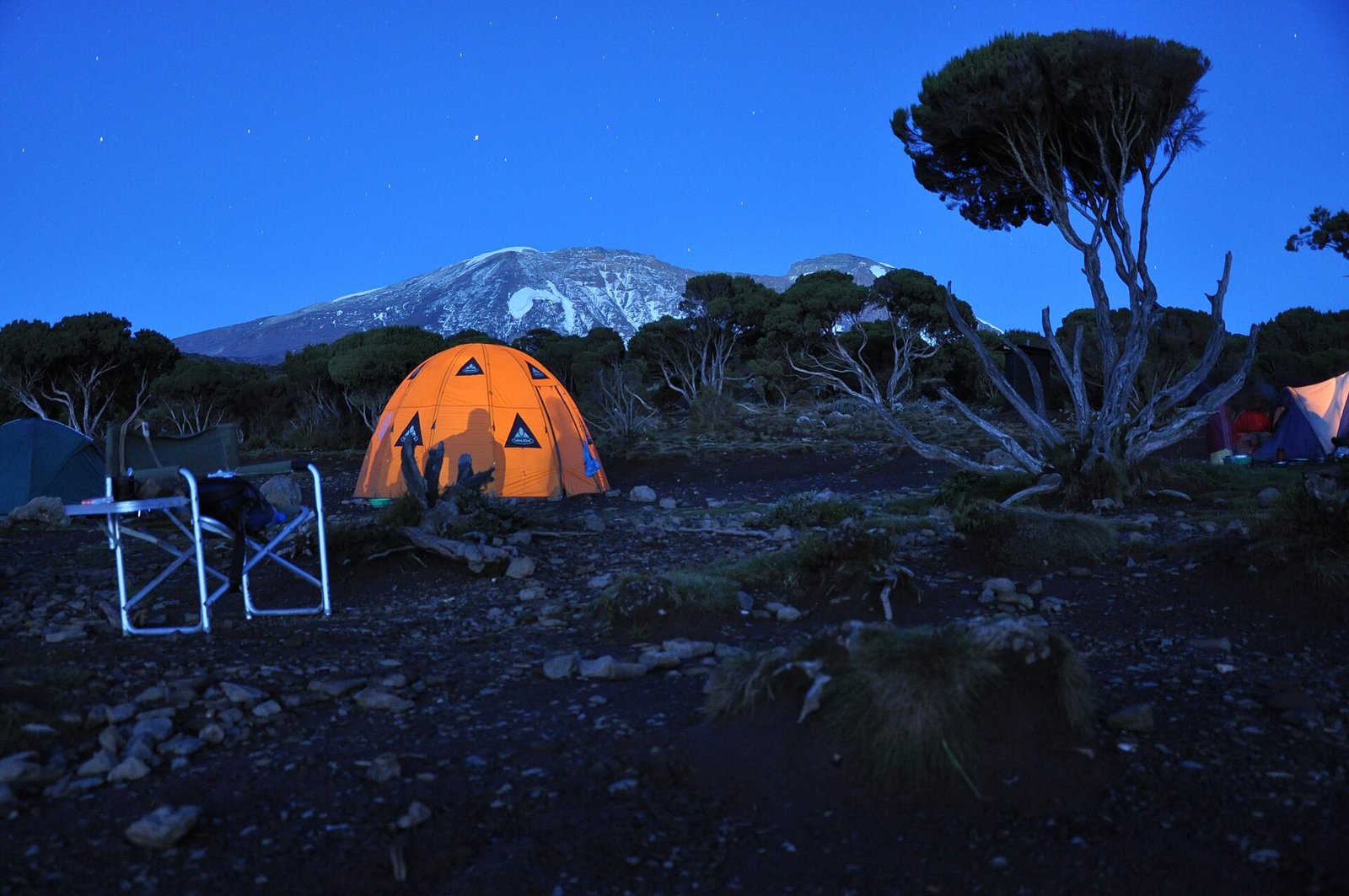
02Most other standard summit routes use designated campsites with tents arranged by the operator, who generally coordinates camp logistics, meals and crew. Conditions are basic compared with a lodge, and nights can be cold.
Many climbers stay in Moshi or nearby. A pre-climb night allows equipment checks, briefings and rest after travel; a post-climb night helps recovery before continuing to another destination.
WILDLIFE & NATURE
Kilimanjaro is not only a climbing destination. Its ecological zones support a variety of plants, birds and mammals.
The lower slopes hold forest that can be rich in vegetation and wildlife. Depending on the area, visitors may meet monkeys, forest birds and other animals.
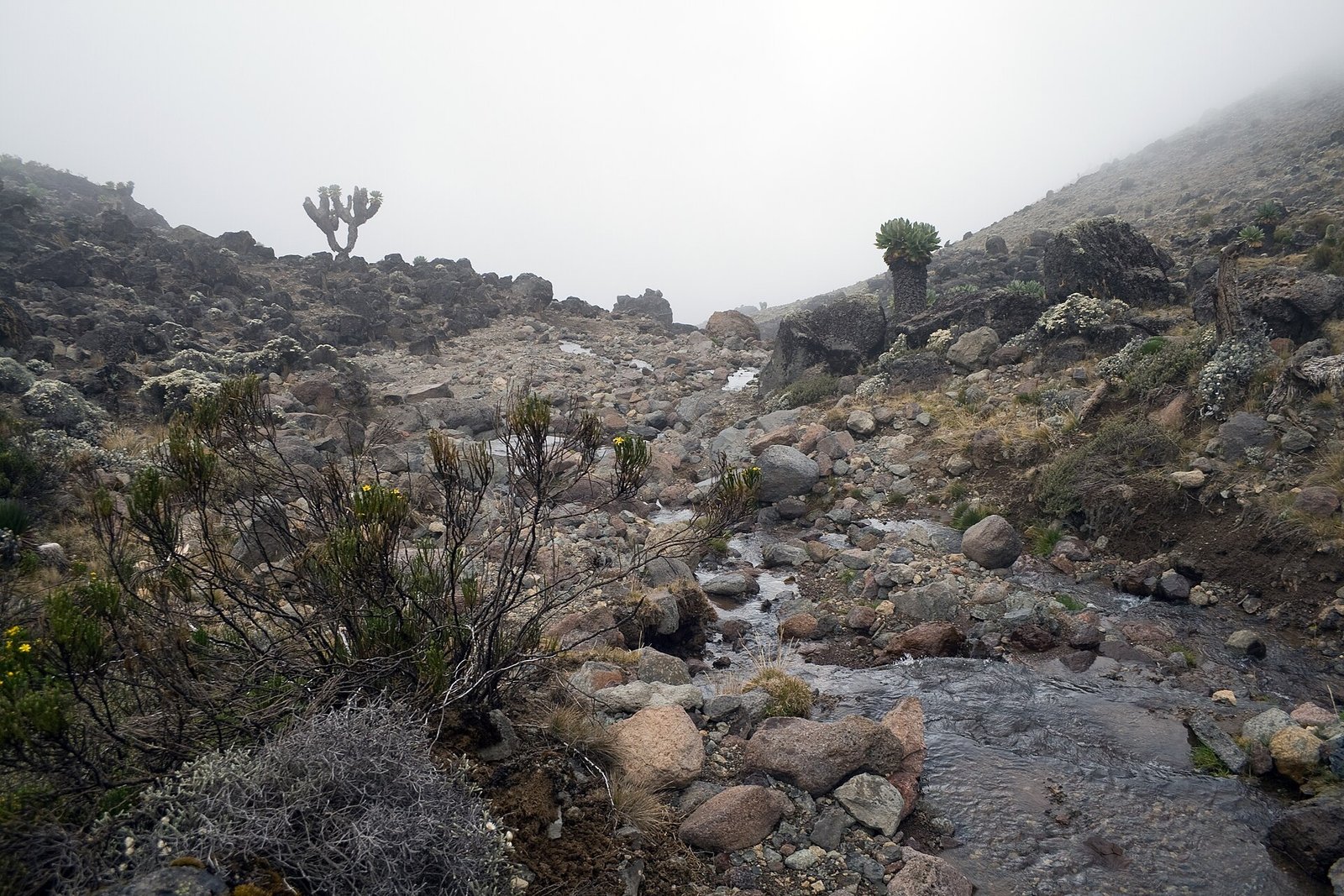
The forest gives way to heath, moorland and open terrain. Giant groundsels and lobelias are among the distinctive plants of the high-altitude environment; their distribution varies by route and elevation.
Birds may include ravens and various forest or high-altitude species. Mammals occur in some habitats, but wildlife sightings are not the main aim of a summit trek.
Do not feed animals, leave rubbish or disturb wildlife. Follow all park rules and guide instructions.
COMBINE YOUR TRIP
Many travellers pair the climb with a northern Tanzania safari or a rest on Zanzibar. Allow time for recovery and realistic transfers after the mountain.
Open plains, predators and the Great Wildebeest Migration, a game-drive follow-up to a high-altitude trek.
Serengeti guideA dramatic volcanic landscape with a wide variety of wildlife; a practical addition depending on route, time and accommodation.
Ngorongoro guideKnown for elephants, baobabs and seasonal wildlife concentrations, a different landscape after the mountain.
Tarangire guideBeaches, marine experiences and historic Stone Town, a relaxing contrast to the physical demands of the climb.
ZanzibarSAMPLE TRAVEL PLAN
A broad example, not a fixed climbing schedule. Your itinerary should reflect the chosen route and the time needed to acclimatise.
Arrive at Kilimanjaro International Airport or another suitable point and transfer to your accommodation in Moshi or nearby.
Meet your climbing operator, review the route, check equipment and confirm arrangements.
Begin the chosen route and follow the planned ascent, camps and acclimatisation schedule. The number of days depends on the route.
Go according to the guide’s assessment, weather and your health. If it is unsafe to continue, turn back.
Descend per the route plan, exit the park and return to your accommodation.
After recovery, continue to Serengeti, Ngorongoro, Tarangire or Zanzibar if schedule and budget allow.
Do not compress the climb just to fit more destinations into a short holiday. Adequate acclimatisation and safe recovery should come first.
CHOOSING AN OPERATOR
Your operator plays a major role in organising a safe, well-managed climb. Before booking, consider:
Confirm the company is authorised to arrange the climb and uses appropriately licensed guides.
The quote should state the route, number of days, camp locations, meals, accommodation and included services.
Ask why they recommend that route and schedule. A credible answer considers altitude gain, rest and the overall profile.
Ask how guides monitor climbers, respond to altitude symptoms and organise emergency help or descent.
Confirm which equipment is supplied, how luggage is carried and what support is provided on the mountain.
Request an itemised quote explaining park charges, accommodation, transfers, crew, equipment and exclusions.
Treatment of the mountain crew. Ask about staff welfare, suitable equipment, meals and fair working arrangements. Responsible tourism respects the people who make the climb possible.
RESPONSIBLE CLIMBING
Kilimanjaro is a protected natural area. Follow park rules and minimise your environmental impact.
Drones, off-route travel and certain other activities may need permission or be restricted. Confirm current rules with the park authority before travelling.
FAQ
Quick answers about Mount Kilimanjaro.
Mount Kilimanjaro is 5,895 metres (19,341 feet) above sea level at Uhuru Peak, its highest point.
Yes. Mount Kilimanjaro is the highest mountain on the African continent.
It is a physically demanding high-altitude trek. Technical climbing skills are not normally required on the standard routes, but endurance, preparation, acclimatisation and careful attention to safety are essential.
Most standard summit itineraries take around five to nine days or longer, depending on the route. Many first-time climbers choose six to eight days or more to allow additional time for acclimatisation.
Lemosho and Machame are commonly considered by first-time climbers because they offer varied scenery and itineraries that can include acclimatisation time. The best option depends on fitness, available days, budget and the specific itinerary. A longer route may be preferable to a rushed schedule.
Marangu is often described as having a more straightforward trail profile and is the main route with hut accommodation. However, its shorter itineraries may provide less time to acclimatise. No route should be considered easy in the sense of being free from altitude risk.
January to early March and June to October are commonly preferred periods, although conditions vary. Choose dates based on your route, weather preferences, available time and tolerance for crowds.
Costs vary with route, duration, group size, operator, park charges, accommodation, equipment and transfers. Request a detailed quote and verify the current official fees instead of relying on outdated online prices.
Previous technical mountaineering experience is not usually necessary for the standard trekking routes. However, you should prepare physically, understand the demands of altitude and choose an itinerary suitable for your experience.
Independent solo trekking is not permitted under the park's standard climbing arrangements. Climbs must be organised through an authorised operator with the required guide support. Confirm current requirements with TANAPA before booking.
Yes. Altitude illness can affect anyone, regardless of fitness. Choose an appropriate acclimatisation schedule, report symptoms promptly and follow your guide's safety instructions. Serious symptoms may require immediate descent and medical assistance.
Yes. Many travellers combine the climb with Serengeti, Ngorongoro, Tarangire or other destinations. Allow adequate recovery time and realistic transfer times.
Yes. Depending on current park regulations and available activities, visitors may explore authorised lower-elevation areas or enjoy views of the mountain from surrounding locations without undertaking a full summit climb.
The road journey from Arusha to Moshi generally takes around one and a half to two and a half hours, depending on traffic and starting point. From Kilimanjaro International Airport to Moshi it is usually shorter, often around an hour. Your operator should confirm hotel, park gate and transfer arrangements.
The route and climbing days, accommodation before and after, park charges and taxes, guides and crew, meals and water, tents or huts, park-gate transfers, safety and emergency procedures, equipment included or for hire, and exclusions and payment conditions.
PLAN YOUR CLIMB
Kilimanjaro offers a journey through changing ecological zones to the highest point in Africa. Successful planning starts with a suitable route, enough time to acclimatise, physical preparation and a licensed operator with clear safety procedures.
Before booking, confirm the latest park charges, route arrangements, equipment requirements, accommodation and weather considerations. Be realistic about the demands, and remember that turning back when necessary is part of responsible mountaineering.
This guide provides general travel information and is not a substitute for professional medical advice or a route-specific briefing. Confirm current park rules, fees, activity availability and climbing requirements with the Tanzania National Parks Authority and your licensed operator before departure.