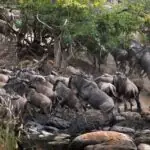
Great wildebeest migration: Where the herds are each month, what to expect in every season, and how to choose the right part of the Serengeti for your Tanzania safari.
GMPublished byGodlove MalekoFounder & certified tour guide
Year-roundThe herds are always moving
Dec to MarCalving in the south
Jul to OctRiver crossings in the north
No guaranteesNature sets the timetable
START HERE
The Great Wildebeest Migration: where will the herds be?
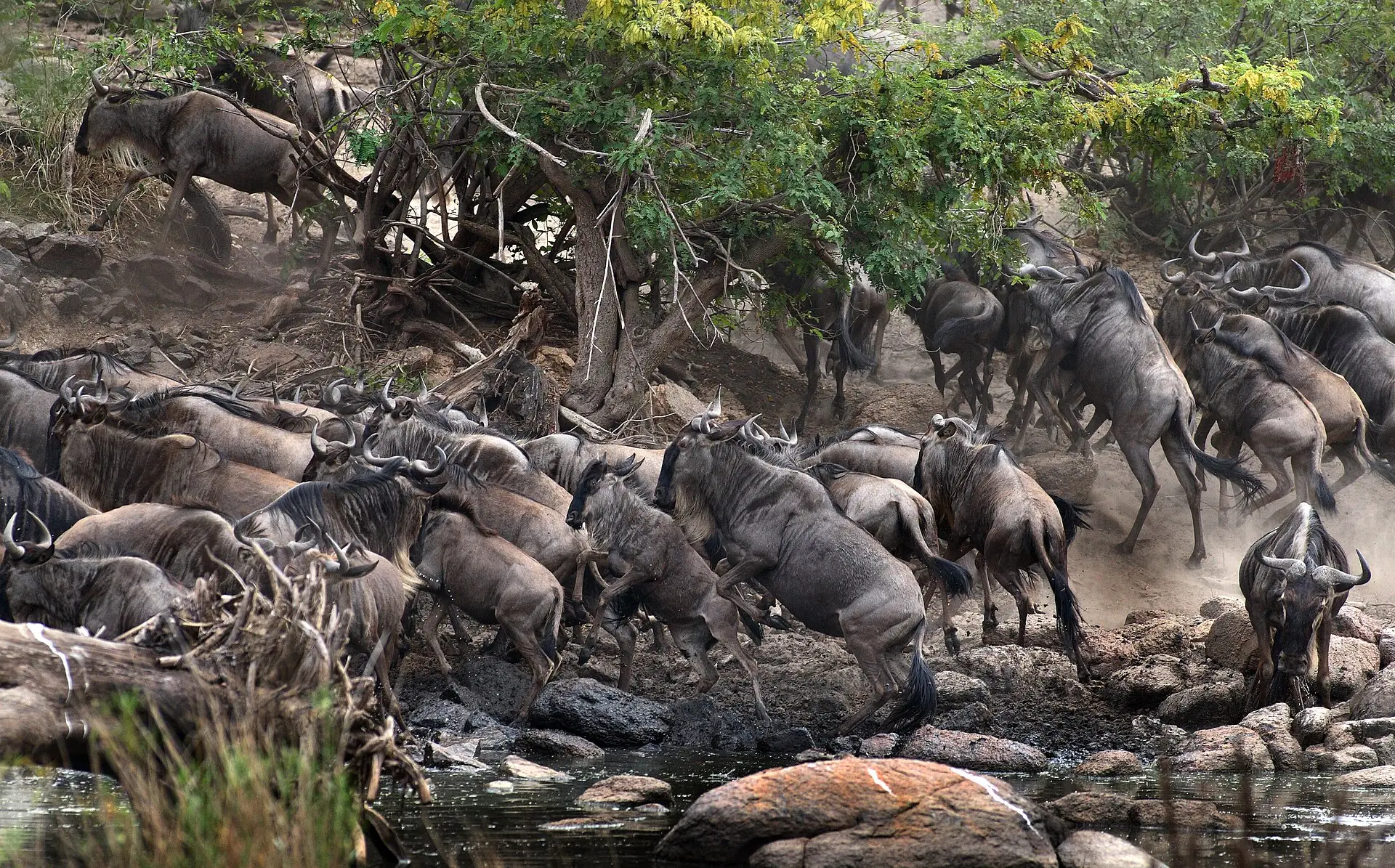
The Great Wildebeest Migration is one of the most remarkable wildlife spectacles in Africa. Every year, vast herds of wildebeest, accompanied by zebras and gazelles, move through the Serengeti ecosystem in Tanzania and the Maasai Mara in Kenya in search of fresh grass and water.
For travellers planning a Tanzania safari, the most important question is not simply when the migration happens, but where the wildebeest are likely to be during your visit.
The herds move throughout the year. Their movements depend largely on rainfall, grazing conditions and the availability of fresh water. This means the best region for a migration safari in February can be very different from the best region in August.
Generally, the southern Serengeti and Ndutu area are associated with the calving season from approximately December to March, while the Western Corridor becomes important during the northward movement and the northern Serengeti offers opportunities to witness Mara River crossings, usually from July to October.
This month-by-month guide explains where to look for the Great Migration, what travellers may experience in each season, and how to choose the right location for your Tanzania safari.
Great wildebeest migration At a glance
Calving: southern Serengeti and Ndutu, roughly December to March.
Northward movement: central and Western Corridor, around April to June.
River crossings: northern Serengeti, usually July to October, never guaranteed.
Planning: choose the region for your dates, stay several nights and confirm recent herd reports.
These are typical seasonal patterns, not a fixed timetable. Rainfall can shift herd locations by several weeks, and different groups may occupy different areas at the same time.
BY MONTH
Great Wildebeest Migration by month: quick guide
Where is the Great Migration each month, and what should you look for?
JanuarySouthern Serengeti and Ndutu: large herds gathering on the plains; calving may begin
FebruarySouthern Serengeti and Ndutu: peak calving activity and predators
MarchSouthern plains and surrounding areas: calves growing; herds beginning to disperse
AprilSouthern and central Serengeti: northward movement and green-season landscapes
MayCentral Serengeti and Western Corridor: herds moving northwest
JuneWestern Corridor and central-western areas: large herds and possible Grumeti River crossings
JulyWestern and northern Serengeti: herds moving north; possible early Mara crossings
AugustNorthern Serengeti: strong opportunities for Mara River crossings
SeptemberNorthern Serengeti and areas near the Kenya border: continued crossing activity, depending on conditions
OctoberNorthern and central Serengeti: possible late crossings and southward movement
NovemberCentral, eastern and southern migration routes: herds moving south as rains return
DecemberSouthern Serengeti and Ndutu: herds returning to the southern plains
These are typical seasonal patterns, not a fixed timetable. Rainfall can shift herd locations by several weeks, and different groups may occupy different areas at the same time.
THE BASICS
Understanding the Great Wildebeest Migration
The Great Migration is the annual movement of large numbers of wildebeest and other grazing animals through the Serengeti–Mara ecosystem.
The journey is not a single procession that begins and ends on specific dates. Instead, the herds move through a broad annual cycle, responding to rainfall and the availability of nutritious grass.
Calving season: thousands of wildebeest calves are born across the southern plains during a concentrated period, attracting predators.
The northward migration: herds move through central and western parts of the Serengeti in search of new grazing.
River crossings: some herds attempt to cross the Grumeti and Mara rivers, creating dramatic wildlife encounters.
Each phase offers a different safari experience. Travellers interested in newborn calves should consider a different itinerary from those hoping to witness a Mara River crossing.
JANUARY TO MARCH
Great wildebeest migration: January to March: calving season in the south
The Great Wildebeest Migration is at its most dramatic on the southern plains, where thousands of calves are born.
January: The Herds Gather in the Southern Serengeti
January is an excellent month to consider a Great Migration safari in the southern Serengeti and the Ndutu area.
Following the seasonal rains, the short-grass plains provide attractive grazing conditions. Large herds gather across the open landscapes, and calving activity may begin or intensify as the season progresses.
The open terrain can provide excellent wildlife viewing and photography opportunities. Lions, cheetahs, spotted hyenas and other predators may be seen around the herds.
Where to stay: Consider accommodation around the southern Serengeti or Ndutu, depending on the expected herd distribution and your chosen route.
Best for: Travellers interested in large herds, green landscapes and the beginning of the calving season.
February: Peak Wildebeest Calving Season
February is commonly associated with the peak of wildebeest calving in the southern Serengeti and Ndutu plains.
During this period, many calves are born over a relatively short window. The abundance of vulnerable young animals attracts predators, creating opportunities to observe natural interactions between predators and prey.
The open plains can make it easier to watch animals from a safari vehicle, although sightings always depend on wildlife movements and conditions on the day. February is particularly rewarding for wildlife photographers and visitors interested in animal behaviour.
Where to stay: Choose a camp or lodge with access to the southern plains and Ndutu area.
Best for: Calving, newborn wildebeest, predator activity and photography.
March: Calving Continues as the Herds Begin to Disperse
In March, calving may continue across parts of the southern plains, while changing rainfall and grazing conditions begin to influence herd movements.
Some groups may remain in the south, while others gradually disperse toward surrounding areas. This can be a rewarding month for travellers who want to combine migration viewing with the Serengeti’s resident wildlife, including lions, leopards, elephants and giraffes.
Rainfall can become more frequent as the season progresses, so prepare for changing weather and potentially muddy roads.
Where to stay: The southern Serengeti and Ndutu remain useful areas to consider, but confirm recent herd reports before booking.
Best for: Calving-season wildlife, green landscapes and a combination of migration and general game viewing.
If calving is your priority, choose accommodation based on access to the expected herd locations rather than selecting a property solely because it is described as a Serengeti lodge.
APRIL TO JUNE
Great wildebeest migration: April to June: the herds move west and north
During the long rains the herds begin their northward journey through the central Serengeti and the Western Corridor.
April: Green Landscapes and Northward Movement
April falls within Tanzania’s main long-rains period. Parts of the southern and central Serengeti may experience substantial rainfall, and the migration can begin moving toward more northerly grazing areas.
The landscape becomes lush, and dramatic skies can create excellent photographic conditions. However, rain may affect road conditions, driving times and access to certain areas. Travellers should discuss seasonal logistics with their safari provider before choosing an itinerary.
April can appeal to visitors who value scenery and a quieter atmosphere, but migration locations may be less predictable than during more concentrated seasonal events.
Where to stay: Consider the southern or central Serengeti according to recent herd reports and road accessibility.
Best for: Green-season scenery, photography and travellers with flexible plans.
May: The Migration Moves Through Central and Western Areas
During May, large herds commonly move through the central Serengeti and toward the Western Corridor. The precise route varies from year to year, but the broader movement is influenced by the changing distribution of fresh grazing.
Travellers may see long lines of wildebeest stretching across the plains, alongside zebras and resident predators.
Rain can still affect driving conditions, and some roads may become difficult to navigate. Choosing an experienced local guide is especially valuable during this period.
Where to stay: Consider the central Serengeti or Western Corridor, depending on the expected movement of the herds.
Best for: Migration movement, expansive landscapes and visitors who prefer to travel outside the busiest safari months.
June: The Western Corridor Becomes Important
June is an interesting month for travellers following the migration through western Tanzania. As herds move northward, the Western Corridor and the area around the Grumeti River can become important wildlife-viewing locations.
Some wildebeest may attempt to cross the Grumeti River, although the timing and frequency of crossings are unpredictable.
The migration is not restricted to one river or one viewing point. Herds can spread over a wide area, and the experience depends on where the animals are moving.
Where to stay: Look for accommodation in the Western Corridor or central-western Serengeti with suitable access to current herd locations.
Best for: Large herds, northward movement and the possibility of Grumeti River crossings.
JULY TO OCTOBER
July to October: the northern Serengeti and the Mara River
The dry season draws the herds north, where river crossings become the main focus for many visitors.
July: The Herds Move Toward the Northern Serengeti
July is an important transition month for travellers hoping to see the Great Migration in northern Tanzania. As the dry season develops, many herds move toward the northern Serengeti and the Mara River region. Some river crossings may occur, but activity can begin at different times depending on rainfall and herd movements.
The northern Serengeti is not simply a single river-crossing location. Animals move through a broad landscape, and sightings may involve herds grazing, travelling or gathering near riverbanks.
Demand for well-positioned accommodation can rise significantly during this period.
Where to stay: Consider northern Serengeti areas such as Kogatende or Lamai, subject to the latest herd reports.
Best for: Travellers hoping to witness the early part of the Mara River crossing season.
August: A Popular Month for Mara River Crossings
August is one of the most popular months for travellers hoping to witness the Great Migration in the northern Serengeti. Large numbers of wildebeest may be present around the Mara River, and crossing attempts can provide dramatic wildlife encounters.
A crossing can involve hesitation, sudden movement and large groups of animals entering the water. Crocodiles live in the river, but the timing, location and outcome of each crossing are unpredictable.
A herd may gather near the river for hours or days without crossing. Other herds may cross at a different location beyond the immediate viewing area.
Where to stay: Consider a camp or lodge in the northern Serengeti with access to the areas where herds are currently being reported.
Best for: Travellers whose main goal is to have an opportunity to witness a Mara River crossing.
September: The Northern Migration Continues
September often remains a strong month for exploring the northern Serengeti. Depending on rainfall and herd movements, large groups may continue gathering around the Mara River, while some animals move between Tanzania and Kenya.
Crossing opportunities can continue, but their timing and frequency vary. The herds may be spread across different sections of the northern ecosystem, so a flexible itinerary is valuable.
September is also a good time to explore the northern Serengeti’s broader wildlife, including resident predators and other plains animals.
Where to stay: Consider northern Serengeti accommodation around Kogatende or Lamai, based on current sightings.
Best for: Potential river crossings, large herds and dry-season wildlife viewing.
October: Late Crossings and Changing Herd Movements
October can offer further opportunities to see the migration in the northern Serengeti, although the pattern becomes increasingly dependent on the year’s rainfall and herd movements.
Some herds may remain near the Mara River, while others begin moving toward central or eastern parts of the ecosystem. This makes October a useful month for travellers who want to explore the northern Serengeti but can accept uncertainty about the timing of crossings.
Your guide’s local knowledge and recent reports can help determine which areas are most promising.
Where to stay: Choose between northern and central Serengeti accommodation according to current herd locations and your broader itinerary.
Best for: Possible late-season crossings and a combination of migration viewing and general wildlife observation.
Book well ahead if you need specific accommodation, particularly for popular dates and camps. However, remember that proximity to a river does not guarantee a crossing during your stay.
NOVEMBER AND DECEMBER
November and December: the herds return south
Seasonal rains bring the herds back toward the southern plains, ready for the next calving season.
November: The Herds Begin Moving South
November is associated with the return of seasonal rains in parts of the Serengeti ecosystem. As fresh grass becomes available farther south, the herds may begin moving toward central and southern grazing areas.
The migration can be dispersed during this transition, so travellers should not expect every herd to follow the same route or arrive in one area at the same time.
The green landscape, birdlife and resident wildlife can still make November a rewarding safari month.
Where to stay: Consider central or eastern Serengeti accommodation, adjusting the location according to current herd movements.
Best for: Green-season landscapes, quieter safari experiences and following the return migration.
December: The Herds Return Toward the Southern Plains
By December, many herds may be moving toward the southern Serengeti and Ndutu area as seasonal grazing conditions improve.
The southern plains begin to become increasingly important in preparation for the next calving season, although the exact arrival and distribution of the herds vary from year to year.
December can be a useful month for travellers who want to combine migration viewing with the Serengeti’s resident wildlife before the main calving period. The festive holiday period can also be busy at popular camps, so accommodation planning remains important.
Where to stay: Consider the southern Serengeti or Ndutu, depending on herd reports and your planned travel dates.
Best for: Herds returning south, green-season scenery and preparing for the calving season.
WHICH REGION
Which part of the Serengeti is best for the Great Wildebeest Migration?
There is no single best region throughout the year. The right choice depends on which part of the migration you want to experience.
Southern Serengeti and Ndutu
The southern plains are especially important from approximately December to March. This region is closely associated with calving season, large herds grazing on short grass and increased predator activity.
Ndutu lies within the broader Serengeti ecosystem around the boundary between the Ngorongoro Conservation Area and Serengeti National Park. Confirm the exact location of your accommodation because access routes and conservation fees can differ.
Central Serengeti
The central Serengeti is useful for travellers who want to combine migration viewing with year-round wildlife. Herds may pass through the region during different parts of the annual cycle, although their presence and concentration change seasonally.
The central area can also provide opportunities to see lions, leopards, cheetahs and other wildlife even when the migration is elsewhere.
Western Corridor
The Western Corridor becomes important during the northward movement, particularly around May and June, although conditions can vary.
The Grumeti River may provide crossing opportunities during the appropriate period. This region can be a good option for travellers interested in following the herds away from the main northern crossing areas.
Northern Serengeti
The northern Serengeti is the main region to consider for potential Mara River crossings, generally from July to October.
Areas such as Kogatende and Lamai can provide access to different parts of the northern migration route. The best base depends on current herd movements and the location of suitable crossing-viewing areas.
For a successful itinerary, prioritise the right region for your dates rather than assuming that every Serengeti camp offers the same migration experience.
WITHOUT CROSSINGS
Can you see the Great Wildebeest Migration without river crossings?
Absolutely. River crossings attract considerable attention, but they represent only one part of the migration.
Travellers can enjoy enormous herds grazing, animals moving across open plains, newborn calves, predator activity and the changing landscapes of the Serengeti.
Calving season is particularly rewarding for those interested in animal behaviour, while the central and western regions can provide excellent opportunities to observe the herds as they move.
If witnessing a river crossing is not essential, you have more flexibility when choosing your travel dates and accommodation.
NO PROMISES
Can anyone guarantee a Great Wildebeest Migration sighting?
Nature sets the timetable
No responsible safari provider can guarantee the exact location of the herds or promise that a particular river crossing will occur during your visit.
The migration is a natural process influenced by rainfall, grazing conditions and animal behaviour. A knowledgeable guide can use recent sightings and local reports to make informed decisions about where to search, but even the best planning cannot control wildlife movements.
How to improve your chances
Choose the region associated with your preferred migration experience.
Allow several days in the relevant area where possible.
Stay flexible about game-drive routes.
Ask your provider how they monitor recent herd movements.
Understand that seeing large herds is different from witnessing a river crossing.
A good safari plan maximises opportunities without promising an outcome that nature cannot guarantee.
HOW LONG
How many days do you need to see the Great Wildebeest Migration?
The ideal length depends on your priorities, budget and the region you plan to visit.
A stay of two or three nights in a migration area can provide useful wildlife-viewing opportunities, but a longer stay gives you more flexibility to search different locations and respond to changing sightings.
Nights by priority
River crossings: allow several nights in the northern Serengeti rather than visiting for only one night.
Calving season: several nights around the southern plains give time to explore different areas and observe wildlife behaviour.
Combined trips: allow extra time for driving between parks, accommodation transfers and flights.
WHERE TO STAY
Where should you stay during the Great Wildebeest Migration?
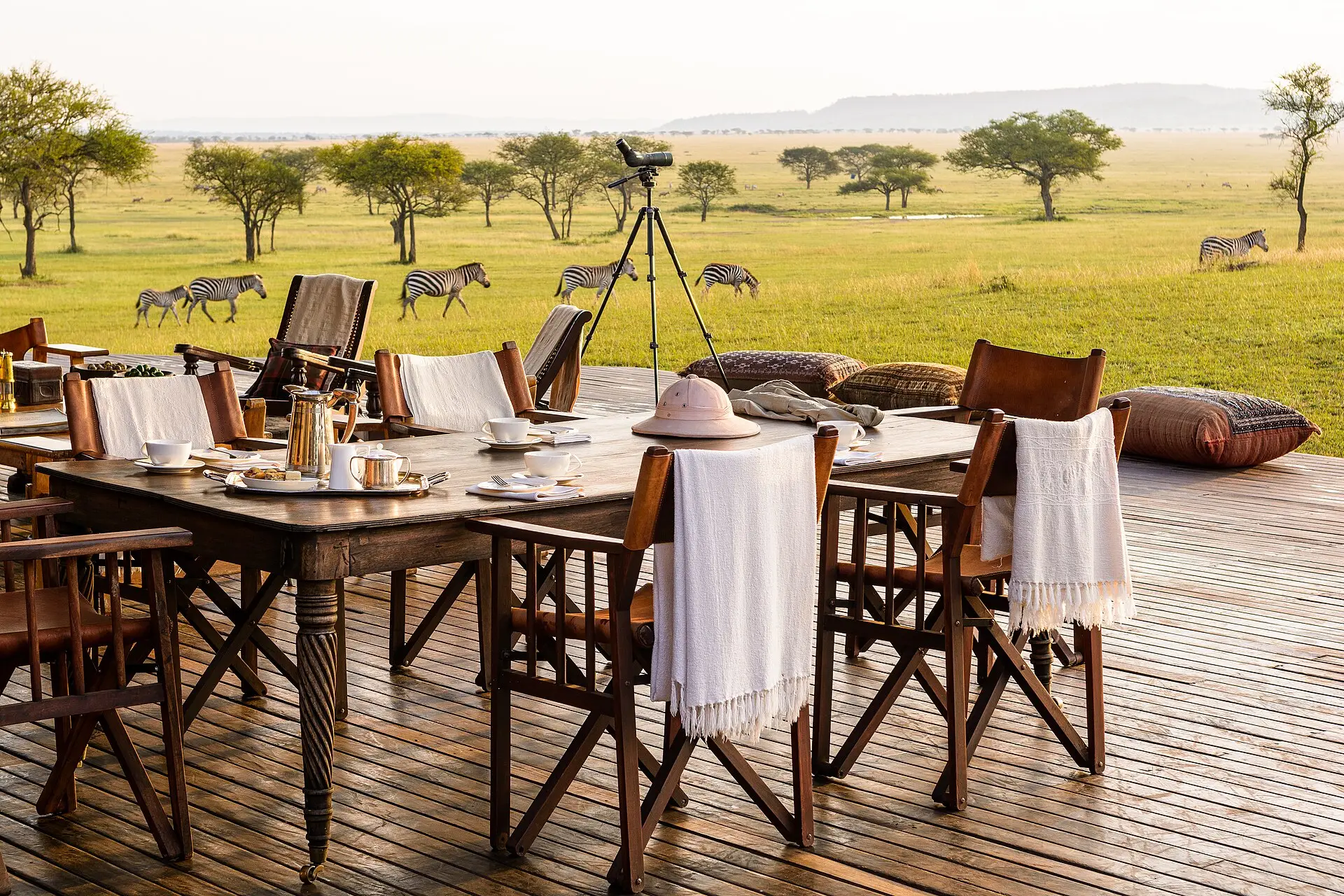
Accommodation should be selected according to your preferred season and the expected location of the herds. Options include permanent lodges, tented camps and seasonal mobile camps. Each offers a different balance of comfort, location, facilities and cost.
When comparing properties, consider:
Distance from likely wildlife-viewing areas.
Access to suitable game-drive routes.
Whether the camp operates during your travel dates.
Included meals, transfers and game drives.
Park or conservation fees and other additional charges.
The experience and local knowledge of the safari team.
A camp described as a migration camp may move seasonally or may be positioned for only part of the annual cycle. Confirm its exact location and operating dates before making a booking.
PLANNING
How do you plan a Great Wildebeest Migration safari?
Start by deciding what you most want to experience. Your priorities should determine the month, region and accommodation.
Step 1
Choose your migration experience
Decide whether calving, river crossings, large herds or a broader wildlife safari matters most to you.
Step 2
Select the most suitable travel period
Use the month-by-month calendar as a starting point, remembering that rainfall can change the expected timing.
Step 3
Choose the right region
Match the accommodation to the seasonal migration pattern rather than choosing a lodge solely by its name or advertised category.
Step 4
Decide how many nights you can spend
Allow sufficient time in the target region, especially if you hope to witness unpredictable events such as river crossings.
Step 5
Compare complete safari costs
Ask providers to clarify accommodation, transport, guiding, meals, park fees and any additional charges so that you can compare like-for-like itineraries.
Step 6
Confirm current information before departure
Ask about recent herd reports, road conditions, accommodation location and any changes to your planned itinerary.
Step 7
Keep your expectations realistic
The Great Migration is extraordinary because it is a natural event. Good planning improves your opportunities, but flexibility remains essential.
FAQ
Great wildebeest migration: frequently asked questions
Quick answers about the Great Wildebeest Migration.
When is the best month to see the Great Wildebeest Migration?
February is commonly recommended for calving, while August is a popular month for potential Mara River crossings. The best month depends on the experience you want and the actual location of the herds.
Does the Great Migration happen all year?
Yes. The herds move throughout the year across the Serengeti–Mara ecosystem. Their locations and behaviour change with rainfall and grazing conditions.
Where is the migration in February?
The southern Serengeti and Ndutu area are commonly associated with the calving season in February.
Where is the migration in August?
The northern Serengeti is a key area to consider in August, particularly for travellers hoping to witness Mara River crossings.
Can I see the migration in April or May?
Yes. Herds may be moving through southern, central and western areas during these months. Rainfall can affect road conditions and herd distribution.
Is the northern Serengeti better than the southern Serengeti?
Neither is universally better. The southern region is particularly important for calving, while the northern region is the main focus for potential Mara River crossings.
Can I see the Great Migration on a budget?
It may be possible to reduce costs by comparing shared and private safaris, accommodation categories and travel dates. However, the best savings depend on current availability, park fees and the itinerary.
Should I book my migration safari in advance?
Booking early is advisable for popular travel periods, especially if you want a specific camp or room category. Confirm the provider’s terms, cancellation policy and exact accommodation location.
Is a river crossing guaranteed in July, August or September?
No. These months can offer opportunities for crossings, but the events are unpredictable and cannot be guaranteed.
Can I combine the Great Migration with Zanzibar?
Yes. A mainland safari can be combined with Zanzibar for beaches, cultural experiences, Stone Town and marine activities. Allow enough time for flights and transfers when planning the itinerary.
FINAL THOUGHTS
The Great Wildebeest Migration is a year-round journey
The Great Wildebeest Migration is not a single event that happens on one date. It is a year-round wildlife journey shaped by rainfall, grazing conditions and the movement of vast herds across the Serengeti–Mara ecosystem.
For calving, focus on the southern Serengeti and Ndutu area. For the northward movement, consider the central and western regions. For potential Mara River crossings, look toward the northern Serengeti during the usual dry-season window.
Most importantly, choose your travel dates according to the experience you want, then select accommodation and routes that give you the best practical access to the relevant region.
1Pick your experience
2Choose your region
3Match your dates
4Plan with flexibility
Share this guide
This guide offers general expectations, not guarantees: wildlife sightings, weather, roads, park rules and services vary. Confirm details, health precautions and insurance with your operator and official sources before travelling.
Great Wildebeest Migration: key takeaways
The Great Wildebeest Migration is a year-round movement of herds through the Serengeti–Mara ecosystem. This page shows where the Great Wildebeest Migration is each month, so you can choose the right region and dates.
Calving is usually centred on the southern Serengeti and Ndutu from December to March.
River crossings are most likely in the northern Serengeti from July to October, but they are never guaranteed.
Plan the Great Wildebeest Migration by region first, then choose your camp and number of nights.
Official sources
Check current rules, fees and entry requirements with these government and authority pages.