
Safari comparison
Which Safari Is Better?
Serengeti vs Maasai Mara: which safari is better? Compare wildlife, the Great Migration, best time, costs, first-time safaris and how to combine both.
START HERE
Serengeti vs Maasai Mara: which safari is better? Choosing between Serengeti National Park in Tanzania and the Maasai Mara National Reserve in Kenya can be difficult. Both destinations are famous for lions, cheetahs, elephants, vast savannahs and the Great Wildebeest Migration, but they offer different experiences depending on when you travel, how many days you have, your budget and the type of safari you want.
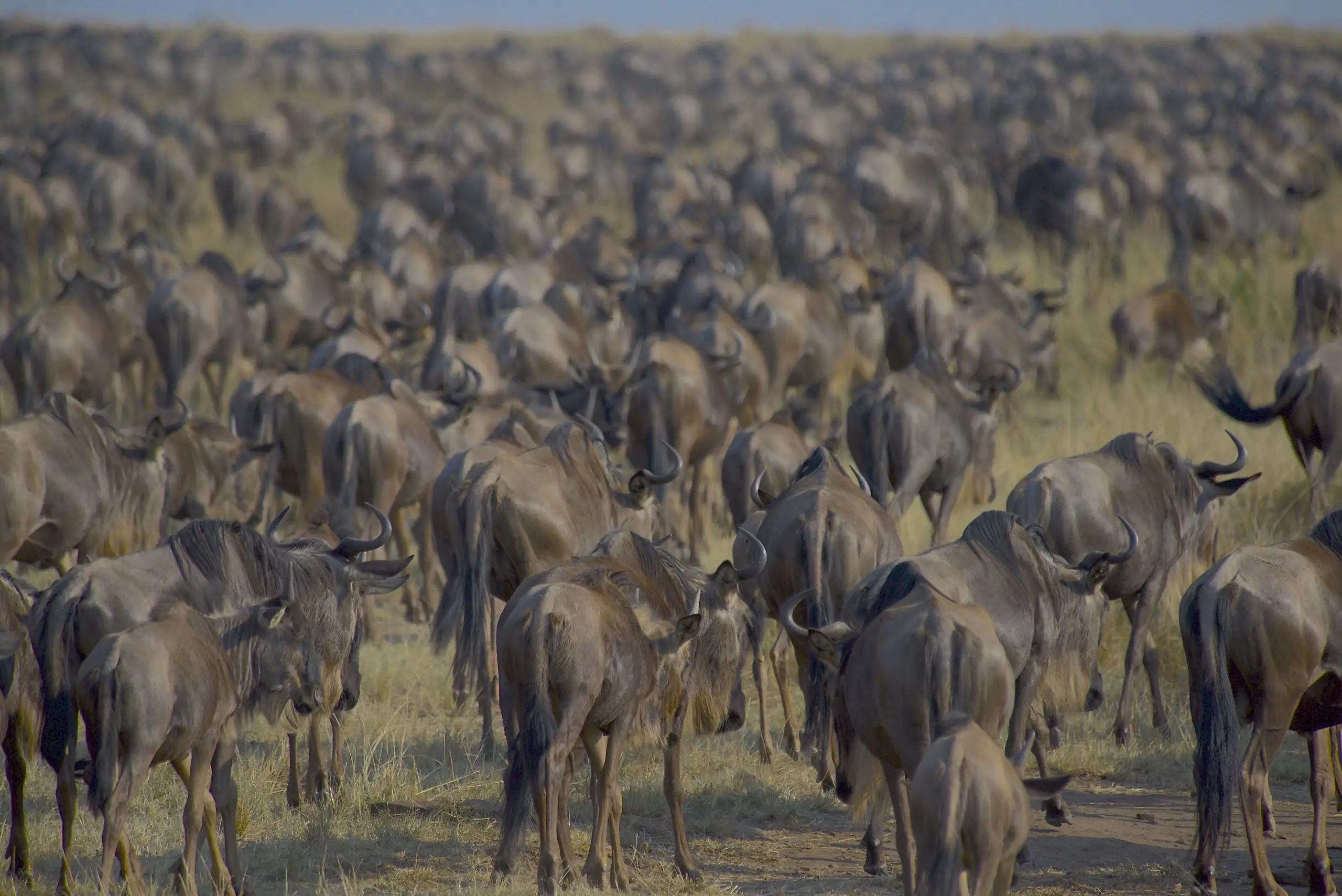
The Great Wildebeest Migration is one of Africa’s most remarkable wildlife spectacles. Every year, enormous herds of wildebeest and zebras move through the Serengeti ecosystem in Tanzania and the Maasai Mara region of Kenya, following seasonal rainfall, fresh grass and water.
But if you are planning a safari, which destination should you choose: Serengeti National Park or Maasai Mara National Reserve? The answer depends on when you travel and what you want to experience.
If you want to see wildebeest calves being born on open plains, Tanzania’s southern Serengeti and the nearby Ndutu area are key destinations. If your priority is the possibility of dramatic Mara River crossings, both northern Serengeti and Maasai Mara are worth considering during the migration season.
This guide compares the two destinations, including the best months to visit, wildlife experiences, costs, crowds, safari duration and practical planning advice.
The short answer: Choose the Serengeti for expansive landscapes, a longer safari and different stages of the Great Migration. Choose the Maasai Mara for a compact, wildlife-rich safari in Kenya, especially in migration season. If you have the time and budget, visit both.
Important: Migration timing changes with rainfall and herd movements. Treat the months in this guide as a planning range. Also read our Great Migration month-by-month guide.
These are general planning guides, not a fixed wildlife schedule. Your operator’s current information takes precedence.
THE DIFFERENCE
Serengeti National Park is in northern Tanzania, while Maasai Mara National Reserve is in southwestern Kenya. They form important parts of the wider Serengeti–Mara ecosystem, which supports the seasonal movement of wildebeest, zebras and other wildlife.
The Serengeti is much larger than the Maasai Mara National Reserve. This means that a migration safari in Tanzania can cover several different regions, from southern calving plains to the western corridor and northern river-crossing areas. Maasai Mara offers a more compact safari destination, with open grasslands and excellent opportunities to observe predators and large herds, particularly during the dry-season migration period.
No guarantees: Neither destination guarantees a particular wildlife encounter. The best choice depends on your dates, the location of the herds and the kind of safari you want.
BEST TIME
The Great Migration takes place throughout the year. The herds move between Tanzania and Kenya in response to changing rainfall and grazing conditions, rather than following a fixed calendar. The following periods are useful for planning, but the timing can vary from year to year.
January to March: choose southern Serengeti and Ndutu for calving. If you want to see newborn wildebeest calves, the southern Serengeti plains and nearby Ndutu area are among the most important places to consider. Many wildebeest give birth over a relatively short period, and the concentration of vulnerable young animals can attract predators, including lions, cheetahs and spotted hyenas. This period can be particularly rewarding for wildlife photography and travellers interested in animal behaviour.
Why choose Tanzania during calving season?
Ndutu lies within the Ngorongoro Conservation Area, adjoining the Serengeti ecosystem. When booking, check whether your accommodation and game drives are based in the conservation area, Serengeti National Park or both. Read more: Ndutu Calving Season guide and wildebeest calving in Serengeti.
April to June: follow the herds through the Serengeti. As the seasons change, the herds gradually move away from the southern plains and through central and western parts of the Serengeti ecosystem. May and June can offer opportunities to see large herds moving across the landscape, and the western corridor and Grumeti region may become important depending on rainfall and grazing conditions. These months can also bring rain, which may affect road conditions, driving times and the overall safari experience. Maasai Mara is generally not the primary destination for the migration’s main calving activity, so if your main objective is to follow the herds through Tanzania, a carefully planned Serengeti safari is worth considering.
July to October: compare northern Serengeti and Maasai Mara. This is the period many travellers associate with the famous Mara River crossings. As migration herds move through northern Tanzania and into Kenya, some approach and cross the Mara River, gathering at the riverbanks, hesitating before entering the water and navigating currents and steep banks. However, not every herd crosses at the same location or time. Animals may wait for hours or days, change direction or cross at a different point.
You have two main options during this period: in northern Serengeti, consider areas around Kogatende and Lamai for access to the northern migration routes and Mara River crossing areas on the Tanzanian side; in Maasai Mara, consider accommodation positioned strategically for the reserve’s migration areas and river systems on the Kenyan side.
November to December: watch the migration return south. As rainfall and grazing conditions change, many herds begin moving back towards Tanzania’s southern plains. The exact route and timing vary each year. The Serengeti can be a practical choice for travellers interested in the migration’s broader annual cycle, and December may mark the beginning of the calving period in some southern areas.
Location matters: A lodge advertised as being in the Serengeti or Maasai Mara may still be a substantial drive from the herds. See our month-by-month Great Migration guide.
MARA RIVER CROSSINGS
Both northern Serengeti and Maasai Mara offer opportunities to witness Mara River crossings. You do not have to travel to Kenya to have a chance of seeing one. The most suitable choice depends on the herd location during your travel dates, the position of your camp and how long you can stay.
Northern Serengeti. Worth considering if you want to experience the migration from Tanzania. Areas around Kogatende and Lamai provide access to northern migration routes and sections of the Mara River. This option may fit travellers who also want to explore other parts of Tanzania, such as central Serengeti, Ngorongoro or Tarangire, depending on their itinerary and budget.
Maasai Mara. Worth considering if you are planning a Kenya safari focused on the northern migration season. The reserve is known for open grasslands, lions, cheetahs and seasonal concentrations of wildebeest. Some visitors also choose private conservancies surrounding the reserve, which are separate management areas with their own access rules, activities and fees. Activities permitted in a conservancy may differ from those allowed inside the national reserve.
HOW MANY NIGHTS
For a migration-focused safari, several nights in the appropriate region are generally more useful than a brief visit. Three or more nights can give you multiple game drives and more opportunities to search for the herds.
Ask before booking: Even a longer stay cannot guarantee a river crossing. Ask your operator how close the camp is to the relevant migration area, how game drives are organised and whether seasonal herd movements have been monitored recently.
WILDLIFE
Both destinations offer excellent wildlife viewing, including lions, cheetahs, elephants, buffaloes, giraffes, zebras, wildebeest and numerous bird species. The difference is mainly in the setting, seasonal concentrations and how you plan your safari.
Wildlife in Serengeti. The park’s enormous size creates a variety of habitats and seasonal wildlife experiences. Depending on where and when you visit, you may encounter:
Central Serengeti is known for resident wildlife and predator viewing, the southern plains are important during calving season, and the northern region is a key migration destination during the river-crossing period.
Wildlife in Maasai Mara. Maasai Mara is known for its open grasslands and opportunities to observe predators and large herbivores. Wildlife experiences may include:
No guarantees: Sightings depend on conditions, animal movements and the skills of your guide. Neither destination can guarantee a particular species or behaviour.
COST
There is no universal answer. A Maasai Mara safari may be less expensive for a short trip starting in Nairobi, while a Serengeti safari may make more sense for someone already travelling through northern Tanzania. Your total budget depends on accommodation, park or reserve fees, transport, season, group size, domestic or international flights, and the number of nights you spend in the wildlife areas.
Do not compare safari quotations based only on the advertised daily price. Check whether accommodation, meals, park or reserve fees, vehicle, guide, transfers and flights are included.
Before you pay: Request a written itinerary and a clear breakdown of all inclusions and exclusions. Read more: How much does a Tanzania safari cost?
Reserve fees: The published 2026 non-resident adult entry fee for the main Maasai Mara National Reserve is US$100 per day from January to June and US$200 from July onward. Confirm the applicable fee and ticket conditions before booking, and check the current Serengeti tariff with Tanzania National Parks.
PHOTOGRAPHY
Both destinations can deliver excellent wildlife photography. The best option depends on your subject and the type of images you want.
Choose Serengeti if you want:
Choose Maasai Mara if you want:
Photography tip: For either destination, ask about vehicle arrangements, space for camera equipment, daily game-drive schedules and the camp’s location. Additional nights can be more valuable than trying to cover too many areas in a short time.
Photography tips for both parks: Book enough nights to avoid depending on a single sighting, choose a camp for the wildlife and landscapes you want, discuss vehicle access and roof arrangements, bring binoculars, spare batteries and memory cards, and be patient rather than chasing a dramatic photograph.
BOTH DESTINATIONS
Yes. Visiting both can give you a broader understanding of the Great Migration and the wider ecosystem shared by Tanzania and Kenya. A combined trip requires careful planning because the parks are in different countries. You need to consider international border arrangements, flight connections or overland transfers, entry requirements, park fees and the time required to move between locations.
A practical approach is to choose your dates first, identify the migration areas most relevant to those dates, and then build the route around them. For example, a traveller visiting in February might focus on southern Serengeti and Ndutu for calving, while a traveller visiting in August might compare northern Serengeti with Maasai Mara, choosing based on herd reports, camp location, budget and the wider route.
More is not always better: Trying to include both destinations is not automatically better if it leaves too little time for wildlife viewing. For a shorter trip, concentrating on one well-positioned region may provide a more relaxed experience.
HOW TO CHOOSE
Use these questions to guide your decision:
FIRST-TIME SAFARI
Both destinations can be excellent for first-time visitors to Africa. The Maasai Mara can be a good choice if you have only a few days in Kenya and want to spend much of your time on game drives, because its compact layout may make a shorter itinerary practical. The Serengeti is particularly appealing if you can spend several days exploring different regions, and it fits naturally into a northern Tanzania itinerary that includes the Ngorongoro Conservation Area and Tarangire National Park.
Choose the Maasai Mara if:
Choose the Serengeti if:
Guide and itinerary matter: For first-time visitors, the quality of the guide and itinerary matters just as much as the park itself. A well-planned safari gives you time to watch wildlife without rushing between destinations. See our Ngorongoro and Serengeti guide.
FAMILIES
Both parks can work well for families, provided the itinerary, accommodation and activities suit the children’s ages and needs. The Maasai Mara may suit families seeking a shorter Kenya safari, while the Serengeti can be rewarding for families with more time to explore different habitats and enjoy a longer wildlife experience. Before booking, consider:
Private vehicle: A private vehicle can provide more flexibility for breaks and meal times. Families should also check each lodge’s age policies, since these vary. See our group vs private safari guide.
CROWDS
Crowding depends on the season, the location of the animals and the number of vehicles at a sighting. The Serengeti’s larger size offers more opportunities to explore different areas, but popular locations can still become busy, while the Maasai Mara can be crowded around famous sightings and migration hotspots during peak months.
In the Maasai Mara region, private conservancies can offer a different experience, with specific rules and activities that may not be available inside the main reserve. In the Serengeti, choosing a less central region or a well-positioned camp can help shape a quieter safari, depending on seasonal wildlife movements.
Ask your operator: If avoiding crowds is important, ask about the location of the camp, vehicle density, access rules and likely wildlife distribution during your dates.
ZANZIBAR
Yes. The Serengeti is a particularly convenient choice for travellers who want to combine a Tanzania wildlife safari with a beach holiday in Zanzibar. Depending on the itinerary and flight schedules, you can fly between the Serengeti and Zanzibar, or connect through another Tanzanian airport. Your operator should confirm the actual route, baggage allowance, departure times and any overnight stays needed. A sample itinerary could include:
An example only: The best route depends on the season and how much time you want to spend in each location. Travellers who want to prioritise the migration may benefit from spending more nights in the appropriate Serengeti region rather than adding too many stops. See our Zanzibar guide and honeymoon safari guide.
PROS AND CONS
Serengeti National Park: advantages
Serengeti National Park: things to consider
Maasai Mara National Reserve: advantages
Maasai Mara National Reserve: things to consider
Not a winner-takes-all choice: There is no universal winner. If you have enough time and budget, visiting both can provide a broader understanding of the ecosystem. See our Serengeti migration guide and migration safari cost guide.
FAQ
Quick answers about Serengeti vs Maasai Mara: Quick answers about the Great Migration, river crossings and choosing a destination.
It depends on the time of year and the experience you want. Serengeti is a strong choice for the wider annual migration cycle and the southern calving season. Northern Serengeti and Maasai Mara both offer opportunities for Mara River crossings during the migration period.
There is no single best month for every migration experience. January to March is generally associated with calving in southern Serengeti and Ndutu, while July to October is commonly associated with northern migration activity and possible Mara River crossings. Actual timing changes with rainfall and herd movements.
The migration moves through different regions during the year, so a migration-related experience may be possible in different seasons. However, the location and concentration of the herds change. Choosing the right Serengeti region for your dates is essential.
No. River crossings are natural events, not scheduled attractions. Herds may gather at the river and wait, cross at a different location or move away without crossing while visitors are present.
Yes. Maasai Mara National Reserve is approximately 1,500 square kilometres, while Serengeti National Park covers approximately 14,750 square kilometres. Figures can vary slightly by source and by whether surrounding conservancies or the wider ecosystem are included.
Both areas support several of Africa’s iconic large mammals, but sightings vary. Leopard and rhinoceros sightings can be particularly unpredictable, and no safari should promise that you will see every member of the Big Five.
Booking ahead is sensible if you want accommodation in a particular migration region during a popular period. Before paying, confirm the camp’s location, the dates, cancellation terms and what happens if the herds move elsewhere.
The Serengeti is generally a better fit for travellers who want vast landscapes, several migration stages and a longer Tanzania safari. The Maasai Mara can be better for a shorter Kenya safari focused on big cats and seasonal migration activity. Neither destination is universally better.
No. The Maasai Mara is in Kenya, while Serengeti National Park is in Tanzania. They are separate protected areas within the wider Serengeti–Mara ecosystem, and wildlife moves between them.
The best location depends on the time of year. The southern Serengeti and wider Ndutu area are popular for calving season, while the northern Serengeti and Maasai Mara are important when herds move towards the Mara River. Check recent herd locations before choosing a camp.
Not in every case. A short safari from Nairobi can make the Maasai Mara practical for some budgets, while a multi-day Serengeti safari may involve longer transfers and additional accommodation. Compare the complete package rather than park fees alone.
Four to seven days is a useful planning range for a Serengeti-focused safari, especially if you want to explore more than one region. A shorter visit is possible, but travel time and the location of wildlife should guide your plans.
Both destinations have excellent lion-viewing opportunities. The outcome depends on the season, guide, location and time spent on game drives rather than the park name alone.
FINAL THOUGHTS
To sum up Serengeti vs Maasai Mara: Serengeti and Maasai Mara are connected parts of one remarkable wildlife ecosystem, but they offer different ways to experience the Great Migration.
Choose southern Serengeti and the nearby Ndutu area if your priority is wildebeest calving. Consider northern Serengeti or Maasai Mara if you want the possibility of Mara River crossings. If you have enough time and budget, visiting both countries can provide a wider perspective on the migration.
The most important planning decision is not simply which park has the better reputation. It is choosing the right region, at the right time, with realistic expectations and enough days to enjoy the wildlife.
Safari Best Tanzania provides independent travel information to help visitors plan trips to Tanzania and connect with independent tour operators. Compare your options carefully and confirm current travel rules, fees and seasonal conditions before booking.
Official and useful sources:
This guide offers general information: migration timing, fees and prices vary and cannot be guaranteed. Always confirm current travel rules, fees and seasonal conditions with your tour operator and the official sources before booking.
Serengeti vs Maasai Mara has no universal winner: the better safari depends on your travel month, where the herds are, how many days you have and what you most want to see.
Check current rules, fees and entry requirements with these government and authority pages.
Continue planning with these Safari Best Tanzania guides.
 Serengeti Great Wildebeest Migration: Where to See It Month by Month
 Ndutu Calving Season: The Complete Safari Guide
 When and Where Can You See Wildebeest Calving in Serengeti?
 How Much Does a Tanzania Safari Cost in 2026? A Complete Price GuideSerengeti Wildebeest Migration: Complete Visitor Guide 2026/2027How Much Does a Serengeti Wildebeest Migration Safari Cost?
 Zanzibar
AI-generated from this page. Please confirm the details with us.
Need help planning your safari?Unahitaji msaada?
We are here to answer your questions about parks, prices, best time to visit and your itinerary.
Please confirm important details with Safari Best Tanzania or official sources.

Automatic translation by Google Translate. It can contain errors, so confirm important details with us.